Alcohol at Weddings Isn't the Entertainment—It's Part of the Hospitality
Written By Sholeh Munion | Sholeh Events
Sholeh Events is a premium wedding coordinator in Chicago providing strategic vendor contract review, luxury timeline management, and guest experience logistics across the Chicagoland area.
One of the biggest shifts we've seen in weddings over the past several years has nothing to do with color palettes or floral trends. It's how couples think about the bar.
For a long time, an open bar was considered the default measure of hospitality. The bigger the selection, the later the party, the better the wedding—or so the thinking went. Today, more couples are asking a different question: How do we create an incredible celebration where every guest feels included? That subtle shift has changed the conversation around alcohol entirely.
The Best Bars Are Designed Intentionally
Alcohol should enhance a celebration, not define it. Some of the most memorable weddings we've planned featured thoughtfully curated beverage experiences rather than the standard, overwhelming bar package. Things like:
A signature cocktail that reflects the couple's story
A beautifully crafted mocktail menu
An espresso bar that keeps the dance floor energized
Late-night hot chocolate during a winter reception
These elements can become wonderful conversation starters while making every guest—whether they drink alcohol or not—feel like they were deeply considered.
Hospitality Means Giving Guests Options
One of the simplest ways to elevate the guest experience is to make non-alcoholic beverages feel just as intentional as everything else. Too often, mocktails become an afterthought with simple inclusions like water, soda, and maybe lemonade. But guests who aren't drinking shouldn't feel like they're choosing the "less exciting" option.
The reality is that there has been a strong trend toward less drinking in general, especially among Gen Z, only 46% of which have had an alcoholic beverage in the last year!
Beyond classic juice-and-soda mocktails, sophisticated contemporary weddings are embracing diverse beverage alternatives that keep the sensory experience high:
Botanical & Adaptogenic Elixirs: Drinks infused with ashwagandha, reishi, or magnesium that promote relaxation without the next-day hangover.
Artisanal Herbal Teas & Cold Brews: Elevated iced hibiscus blends, lavender-infused Earl Grey mock-tinis, or nitro cold brews served in upscale stemware.
Cannabis-Infused Beverages (THC/CBD): Low-dose social tonics or sparkling waters that offer a mild, uplifting buzz for areas where legal and venue regulations permit.
Beautiful glassware, fresh garnishes, creative ingredients, and a thoughtful presentation communicate something incredibly important: Everyone belongs at this celebration.
We do encourage you to check with your venue to ensure all alternative options are viable.
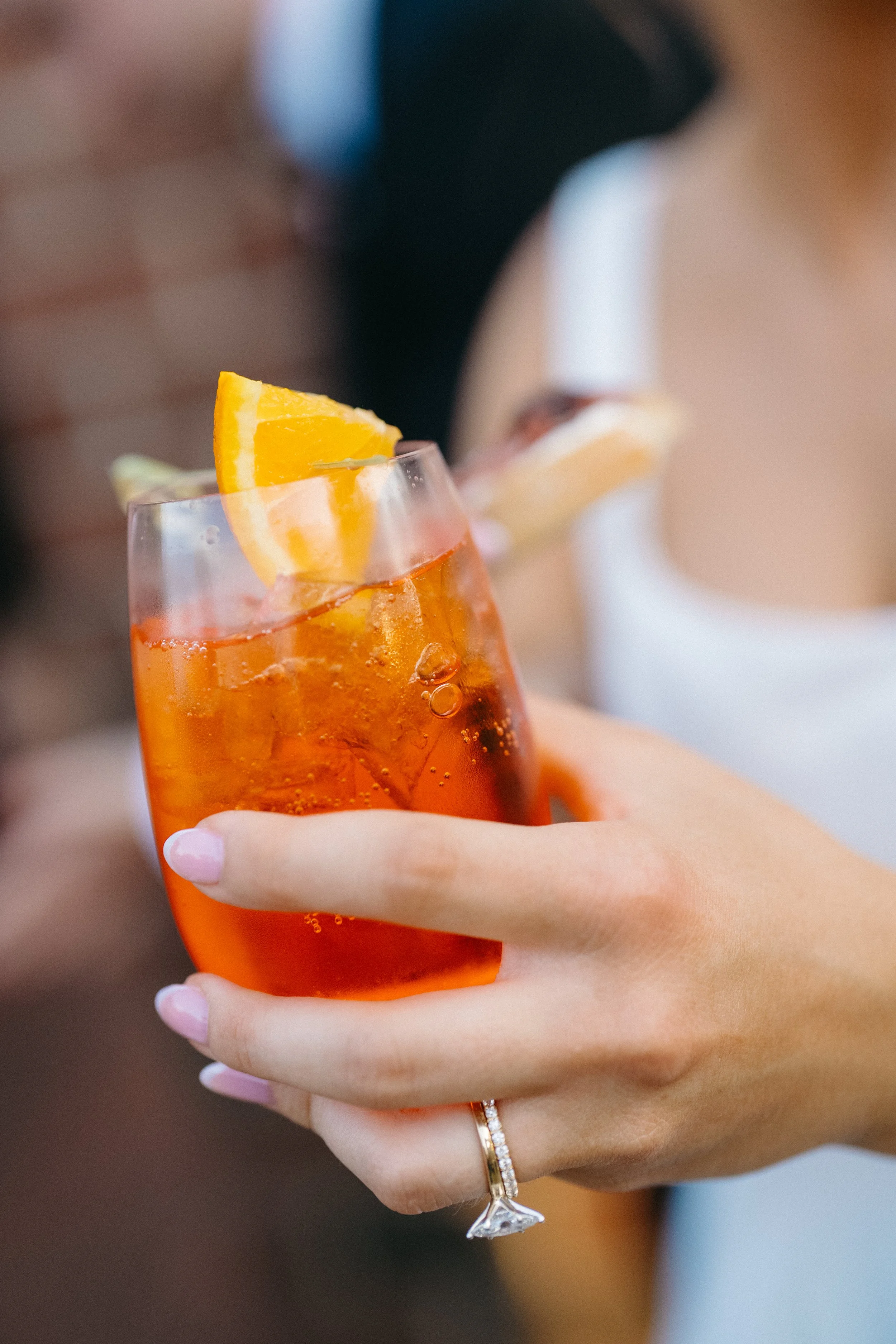
Photo Credit: Micki Harris with Micki Harris Photography hello@mickiharris.com
Navigating the Business Side: Contracts, Minimums, and Risk Management
While curating a beautiful beverage menu is the fun part, navigating the legalities and financial liabilities of a wedding bar requires careful planning. Here is what every couple needs to consider to protect themselves and their budget:
1. Navigating Beverage and Alcohol Minimums
Most venues and catering companies enforce a strict food and beverage (F&B) minimum. If your guest count drops or you switch to a lighter bar package, you might find yourself falling short of that contractual number.
What happens if you don't meet it? You don't get a discount; instead, the venue will simply charge you an "unmet minimum fee" or a top-off fee to bridge the gap. You are essentially paying for nothing.
How to mitigate it: If you know your guest count is lower than anticipated, negotiate in advance to reallocate those dollars. Ask the venue if you can swap the extra alcohol spending for upgraded late-night food stations, an upscale espresso cart, premium passed appetizers during cocktail hour, or high-end dessert displays.
The Bottom Line on Minimums: Don't leave money on the table. If you are tracking under your minimum, look at it as an opportunity to inject luxury into other areas of the night rather than forcing extra alcohol on a smaller crowd. Early communication with your venue turns a potential financial penalty into a customized guest upgrade.
2. Bringing in Alternative Alcohol (BYOB Venues)
If you are booking a raw space or a venue that allows you to bring your own alcohol, it can be a massive budget saver—but it introduces significant legal risks.
The Risks Involved: As the hosts, you assume a high level of social host liability if a guest is overserved, damages the property, or drives under the influence.
Liability & Insurance Requirements: Never allow a friend or family member to serve alcohol "buffet style" or act as a casual bartender. You must hire a licensed and insured professional bartending service that carries Liquor Liability Insurance. Furthermore, we require our couples to secure a Special Event Liability Insurance policy (often through platforms like WedSafe or Wedsure) that explicitly includes a host liquor liability rider to protect their personal assets.
The Solution for BYOB Protection: Mitigating these major risks comes down to strict operational boundaries. By pairing a commercial, RAMP/TIPS-certified bartending staff with a comprehensive event insurance policy, you build an ironclad safety net. The professional bartenders act as your frontline defense against over-serving, while your policy covers the unexpected, letting you actually enjoy your night stress-free.
Think Beyond the Drinks
When couples discuss alcohol service, we always encourage them to look past the number of drink options and look closely at the logistics.
Instead, ask yourself:
How will guests get home safely?
Will water be easily accessible throughout the entire evening?
Is food being served consistently while the alcohol is flowing?
Will guests know their transportation options before they leave the venue?
Hospitality doesn't end when the last drink is poured. It includes making sure every single guest leaves the celebration safely.
To turn these safety questions into actual solutions, we highly recommend integrating proactive safety checkpoints into your master timeline:
Hydration Stations: Don't make guests wait in the main bar line just to get a glass of water. Position self-serve infused water stations near the dance floor and exit doors.
Pre-Arranged Shuttle Tracking: Print a clear shuttle schedule on the back of your seating chart or programs, and have your DJ make an announcement 30 minutes before the last bus departs.
Rideshare Vouchers: Set up a custom Uber or Lyft event code for the night, allowing guests to scan a QR code at the exit for a subsidized ride back to the hotel block.
These kinds of intentional integrations into your big day can make a big difference for your guests, and their memories, in the long run.
Every Wedding Looks Different
Some couples choose full bars, others prefer beer and wine, some feature elaborate cocktail menus, and others host completely alcohol-free celebrations. There isn't one single right answer. The best choice is the one that reflects your priorities while creating an experience where your guests feel comfortable, cared for, and included.
At the end of the day, people rarely remember exactly what brand of liquor was served at the bar. They remember how they felt throughout the evening. And that's exactly what thoughtful hospitality has always been about.
Planning a wedding in Chicago? We'd love to help you design a guest experience that's seamless, legally protected, and intentional from the welcome toast to the last dance.